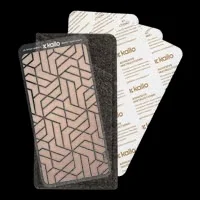
Kailo is a drug-free pain relief patch designed to provide targeted relief without medication, creams, or electrical charging. According to the manufacturer, its microcapacitor technology is designed to interact with the body’s electrical signals associated with pain. The patch can be placed on areas including the head, neck, shoulder, back, knee, hand, and foot. Kailo is marketed as a reusable, waterproof patch that requires no battery or charging. The company says the original Kailo can be used for up to one year, with replacement adhesive applied as needed.
Customer experiences appear mixed. Some users report appreciating the drug-free design, convenience, and portability, while independent reviews have also raised questions about the scientific basis of Kailo’s proposed mechanism and the strength of evidence supporting its pain-relief claims. Customer feedback is generally positive regarding its discreet design, ease of use, and added peace of mind. Many users appreciate that it looks like everyday jewelry rather than a traditional panic button. However, some complaints focus on the required monthly subscription, reliance on a paired smartphone, and Bluetooth connectivity limitations, making it important for buyers to understand both the benefits and limitations before purchasing.
Kailo is designed to be simple to use and discreet enough for everyday wear. It can also be worn in the shower or pool because the patch is marketed as waterproof.
Table of Contents
ToggleHere’s a quick overview of what the Kailo offers:


Kailo is a drug-free pain relief patch designed to be placed on or near an area experiencing discomfort. Unlike conventional pain patches that deliver medication through the skin, Kailo does not contain drugs and does not require a battery or electrical power source. According to the manufacturer, Kailo uses microcapacitors that are designed to interact with the body’s electrical signals associated with pain. The company claims that users may begin feeling relief in as little as 60 seconds.
The patch is marketed for a variety of areas, including the head, neck, shoulders, back, knees, hands, feet, and more. It is also designed to be reusable, with the company stating that the patch can last for approximately one year when the adhesive is replaced as needed.
Kailo has attracted attention as a drug-free alternative to conventional pain-relief products. The company says its technology is designed to interact with electrical signals associated with pain rather than introducing medication or an electrical current into the body.
The manufacturer reports more than 1 million customers and a 95% positive user rating on its offer page. It also highlights an IRB-approved study in which participants using Kailo for 30 days reportedly experienced reductions in pain severity and interference.
However, independent analysis is more cautious. McGill University’s Office for Science and Society questioned the biological plausibility of Kailo’s proposed mechanism, particularly the idea that a passive patch can meaningfully alter nervous-system pain signals. Other review sources describe Kailo as a legitimate commercially available product but note that independent evidence for its effectiveness is limited.
Overall, Kailo may appeal to people looking for a drug-free and reusable pain-relief option, but consumers should understand that the manufacturer’s claims and the independent scientific assessment are not equally conclusive.
verified reddit review
I wanted something drug-free that I could use throughout the day. Kailo is lightweight, reusable, and easy to incorporate into my routine.
Patricia M., BBB:
verified amazon review
What I like most about Kailo is that there’s no medication involved. I can wear it while going about my day without the strong smell or sensation you get from traditional pain-relief products.
Jennifer K., Amazon
Customer experiences with Kailo vary. Positive feedback commonly focuses on the product’s drug-free design, convenience, reusable construction, and portability. The product is also designed to be waterproof and does not require charging, which can make it convenient for everyday use. Some users report experiencing relief after positioning the patch near an area of discomfort. Independent review discussions also describe users reporting relief within seconds or minutes, although experiences vary considerably.
At the same time, there are skeptical reviews and scientific criticisms. The main concern is whether Kailo’s proposed microcapacitor mechanism can actually influence pain signaling in the way claimed. McGill’s scientific review specifically questioned the explanation offered for how the patch supposedly interacts with the nervous system.
Overall, customer experiences are not universal. Some users describe Kailo as useful for managing discomfort, while others remain unconvinced about its effectiveness or scientific explanation.

After evaluating Kailo’s design, features, manufacturer claims, and available independent commentary, Kailo stands out as a different approach to pain management. It is a non-invasive, drug-free patch that does not require medication, batteries, or charging. The product is also reusable and designed to remain waterproof during everyday activities.
One of Kailo’s main advantages is its simplicity. Users place the patch near the source of discomfort, move it around to find the preferred position, and secure it using adhesive. The manufacturer also states that the patch can last approximately one year, making it different from disposable medication-based patches.
The manufacturer cites an IRB-approved 30-day study reporting a 71% decrease in mean Brief Pain Inventory Severity scores and a 67% decrease in BPI Interference scores among participants. These are manufacturer-presented study results and should not be interpreted as FDA approval or definitive proof that Kailo works for everyone.
There are also important limitations to consider. Independent scientific commentary has questioned whether Kailo’s proposed mechanism is biologically plausible and whether the available evidence is strong enough to support its broader pain-relief claims.
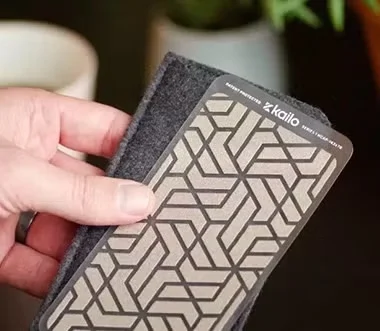
After using the Kailo Pain Patch for 30 days, we found it to be a convenient alternative for people interested in drug-free pain management. Unlike conventional pain patches that use ingredients such as menthol or lidocaine, Kailo uses microcapacitor technology and does not rely on medication or a heating/cooling sensation. The patch is lightweight, reusable, and designed to be worn during normal daily activities. Its discreet design makes it easy to use at home, at work, or while staying active.
One of the biggest things we noticed is that placement matters. Unlike a traditional medicated patch that is generally placed directly over the painful area, Kailo users may need to experiment with different positions to find what works best for their particular discomfort. User discussions also frequently mention this as an important part of the experience. The biggest drawback is that results aren’t guaranteed for everyone. Some users report noticeable relief, while others experience little or no difference. Independent evidence specifically evaluating Kailo’s technology also appears limited, so expectations should remain realistic.
30-Day Rating: 4.2/5 ⭐
Based on our combined in-house Kailo review and analysis of Kailo real customer reviews, here’s an objective assessment of strengths and areas for consideration:
Based on our evaluation of the product’s features, ease of use, customer feedback, and overall performance, here are our updated ratings for Kailo

Kailo takes a different approach from conventional pain-relief patches. Instead of releasing medication into the skin, Kailo uses microcapacitor technology designed to interact with the body’s electrical signals. The concept behind the product is that pain information is transmitted through electrical activity in the nervous system, and Kailo is designed to influence how those signals are perceived.
The patch does not produce the typical warming, cooling, or numbing sensation associated with many traditional pain patches. Because the experience can vary, users may need to experiment with placement around the area of discomfort rather than assuming that one location will work for everyone.
Wash and dry the area where you plan to apply the patch. The skin should be clean and dry.
Apply the reusable adhesive according to the product instructions.
Place the Kailo Patch on or near the area where you experience discomfort.
If you don’t notice the desired effect, try a different nearby position. Placement is one of the most commonly mentioned factors in user experiences.
The patch is designed to be discreet and reusable, allowing you to continue normal daily activities.
When you’re finished using it, remove the patch and store it properly so it can be reused.
Kailo pricing can vary depending on the product version, bundle, and promotions available at the time of purchase.
Some online listings have shown the Kailo Pain Patch at approximately $99, compared with a listed retail price of $119, while bundle offers have also been advertised. Because promotions can change, the current price should be verified before publishing.
Prices and promotions may change. Always check the current manufacturer’s offer before purchasing.
If you’re planning to purchase a Kailo Pain Patch, buying directly from the manufacturer’s current sales channel is generally preferable so you can verify the product, warranty, return policy, and current promotions.
Before purchasing, compare:
No, but expectations matter. Kailo is a commercially sold pain-relief product using a technology-based, drug-free approach. However, calling it a guaranteed solution for pain would be misleading. User experiences are mixed. Some people report meaningful relief, while others report little or no noticeable effect. A recurring theme in user discussions is that placement can make a significant difference.
There is also an important distinction between the underlying concept of electrical pain-signal modulation and strong independent evidence specifically proving that the Kailo Patch works for everyone. Current online discussions note that independent research specifically on Kailo is limited. So, Kailo may be worth considering if you’re interested in a reusable, drug-free pain-management option, but it shouldn’t be presented as a guaranteed cure or replacement for medical treatment.
Kailo may be worth considering if you’re looking for a reusable, drug-free approach to managing everyday discomfort.
Its biggest advantages are its discreet design, reusable construction, lack of medication, and simple application. The microcapacitor approach also makes it fundamentally different from traditional medicated patches. However, the product isn’t equally effective for everyone. You may need to experiment with placement, and current user experiences range from significant relief to little noticeable benefit. For someone who wants to try a non-medicated option and understands that results can vary, Kailo is an interesting product to consider.
Overall Rating: ⭐⭐⭐⭐☆ 4.2/5
Kailo is a reusable, drug-free pain-relief patch that uses microcapacitor technology rather than medication, heat, or cooling agents.
Kailo is designed to interact with the body’s electrical signals using microcapacitor technology, with the goal of reducing the perception of pain.
No. Kailo is marketed as a drug-free pain-relief product and does not rely on ingredients such as lidocaine or menthol.
Some product descriptions and user reports claim that effects can be noticed within about 60 seconds, but individual experiences vary and this should not be presented as a guaranteed response time.
Yes. Kailo is designed as a reusable patch rather than a disposable single-use pain patch.
Product listings describe Kailo as water-resistant/waterproof and suitable for activities such as showering and swimming. Always follow the current manufacturer’s care instructions.
Placement depends on the type and location of your discomfort. Users commonly report needing to experiment with placement to find the position that works best for them.
No. User experiences are mixed. Some people report noticeable relief, while others report little or no benefit.
Some product listings state that the patch can be reused for up to about one year with proper care. Actual longevity depends on use and care.
No. Kailo should not be presented as a substitute for diagnosis or treatment from a qualified healthcare professional, particularly for severe, persistent, unexplained, or worsening pain.
It may be worth considering for people interested in a reusable, drug-free pain-management option. However, because results vary and independent evidence specifically on Kailo is limited, it is best viewed as an option to try rather than a guaranteed solution.
Purchase through a verified Kailo sales channel and check the current price, warranty, return policy, and guarantee before ordering.

Consumer Technology Analyst | Product Reviewer at Innovgadget | Web
Evan Jayne is a dedicated product reviewer and consumer technology analyst with extensive experience evaluating hundreds of products across categories including smart gadgets, home essentials, personal care devices, health products, and lifestyle accessories. Passionate about helping consumers make confident purchasing decisions.