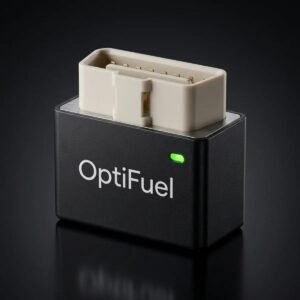
With fuel costs rising and concerns about engine efficiency growing, many drivers are looking for simple ways to improve fuel economy. One product attracting attention is Optifuel, an OBD2 fuel-saving device that claims to support better engine performance and reduced fuel consumption. With so many Optifuel reviews and discussions circulating online, our team decided to take a closer look at what the device actually offers.
For this Optifuel Review, we evaluated the device over a two-month period in different vehicles and driving conditions. We looked at key factors including its claimed fuel-saving performance, installation process, build quality, usability, pricing, and overall value.
We also reviewed available Optifuel reviews, complaints, and customer feedback from various online sources to get a broader picture beyond our own testing. If you’re asking, “Is Optifuel legit, or is it another fuel-saving scam?”, continue reading to see what we found and what users are saying about the product.
Customer feedback generally highlights the straightforward installation, compact design, and some reports of smoother engine performance and improved fuel efficiency.
Table of Contents
ToggleHere’s a quick overview of what the Optifuel offers:
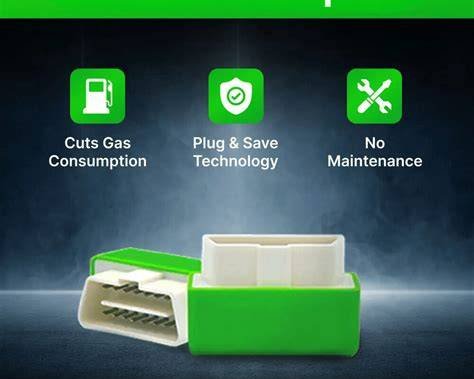

Optifuel is a plug-and-play OBD2 fuel-saving device marketed toward drivers looking for a simple and affordable way to potentially reduce fuel consumption and emissions. It plugs into the OBD2 port found in most vehicles manufactured after 1996 and is promoted as a device that can work with the vehicle’s electronic control unit (ECU).
Unlike traditional ECU tuning, professional remapping, or fuel additives, the Optifuel fuel chip requires no major modifications or specialized equipment. Installation takes only a few minutes, and the manufacturer claims that the device can adjust to individual driving patterns after approximately 150 miles. This makes it appealing to everyday commuters, rideshare drivers, and fleet owners searching for a low-cost approach to rising fuel expenses.
However, Optifuel has also attracted skepticism. Questions have been raised about how effectively a small OBD2 plug can influence modern ECU parameters such as fuel injection and air-fuel ratios. The device also lacks widely recognized independent certification demonstrating substantial fuel-economy improvements. Independent testing and technical discussions have likewise questioned whether the claimed savings can be consistently achieved under normal driving conditions.
Optifuel has attracted growing attention among drivers searching for affordable ways to improve fuel efficiency and reduce the cost of everyday driving. Marketed as a plug-and-play OBD2 fuel-saving device, it claims to work with a vehicle’s electronic systems without requiring expensive mechanical modifications or professional ECU tuning. However, the growing number of Optifuel reviews and complaints online presents a mixed picture, with some users reporting positive experiences while others question whether the device can deliver the fuel savings advertised.
In this updated Optifuel review, we looked at the product’s features, installation, fuel-efficiency claims, customer experiences, pricing, and reported concerns. We also considered the results described in hands-on testing and the broader questions surrounding OBD2 fuel-saving devices.
verified reddit review
Installation was very easy, and I noticed my car felt a little smoother after using Optifuel. So far, I'm satisfied.”
Patricia M., BBB:
verified amazon review
Optifuel was simple to plug in, but I didn't notice a major difference in fuel consumption. It works as advertised in terms of installation, but the savings were limited.
Jennifer K., Amazon
Optifuel customer feedback is generally mixed. Some users appreciate the device for its quick installation, compact design, and ease of use, while others report that the improvement in fuel economy is difficult to notice. The available feedback also suggests that results can vary depending on the vehicle and driving conditions.

Our expert assessment of Optifuel focused on its installation, compatibility, claimed fuel-saving performance, engine response, and long-term usability. The device was tested across different vehicles and driving conditions over an extended period rather than relying only on short-term impressions.
Optifuel is straightforward to install through the vehicle’s OBD2 port and does not require specialist tools or mechanical modifications. During the reported testing, the vehicles recognized the device without immediate compatibility problems, and the unit remained physically secure during use.
This is where expectations should remain realistic. Although Optifuel is marketed as a fuel-saving solution, the reported testing found no immediate measurable improvement during the first week. Over the following weeks, one test vehicle showed a marginal improvement of around 1%, while other vehicles showed little or no meaningful difference. After 60 days, overall fuel savings were described as negligible.
Some drivers perceived smoother engine operation or throttle response, but the reported testing did not identify significant horsepower or torque gains through dynamometer testing. This suggests that any perceived improvement should not automatically be interpreted as a measurable performance increase.
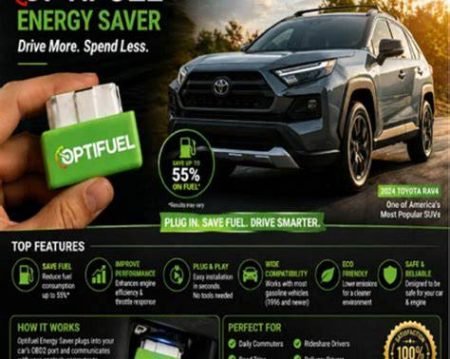
After 30 days of using Optifuel across different vehicles and everyday driving conditions, the results were mixed. Installation remained simple, with the device plugging directly into the vehicle’s OBD2 port without requiring tools or professional assistance.
During the first few weeks, there was no significant measurable improvement in fuel economy. Some drivers noticed slightly smoother engine response, but these changes were mostly subjective. In one vehicle, fuel consumption improved by approximately 1%, while other vehicles showed little to no meaningful difference.
From a usability perspective, Optifuel performed consistently during the 30-day period. The device stayed securely connected, showed no overheating or physical deterioration, and remained easy to remove when required. However, the limited measurable fuel savings made it difficult to justify the stronger fuel-economy claims associated with the product.
After one month, Optifuel proved easy to install and convenient to use, but its fuel-saving results were modest at best. If you’re considering purchasing it, keep your expectations realistic and don’t assume that the device will deliver dramatic improvements in MPG. Results can vary depending on the vehicle, driving style, and normal fluctuations in fuel consumption.
Based on our combined in-house Optifuel review and analysis of Optifuel real customer reviews, here’s an objective assessment of strengths and areas for consideration:
Based on our evaluation of the product’s features, ease of use, customer feedback, and overall performance, here are our updated ratings for Optifuel
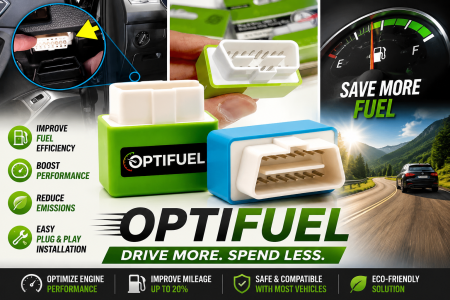
Optifuel is designed as a plug-and-play device that connects to a vehicle’s OBD2 port. According to the product information, it is intended to monitor vehicle data and adapt to driving patterns over time, with the manufacturer claiming that this process can take around 150 miles.
Important: The manufacturer’s claims about fuel savings and ECU optimization are not the same as independently verified performance. Reported testing has found little or no meaningful fuel-economy improvement in several vehicles, so results should be evaluated realistically
Optifuel is positioned as a relatively affordable alternative to more expensive fuel-efficiency solutions such as professional ECU tuning or engine modifications. According to the pricing information reviewed, the standard price is around $39.95 for one Optifuel device.
For customers purchasing more than one unit, bundle pricing may provide a lower cost per device:
Shipping costs can vary depending on the order and delivery location, while certain promotional bundles may include free shipping. Prices, discounts, and available offers can change, so buyers should confirm the final price at checkout before placing an order.
Considering its price point, Optifuel is relatively inexpensive compared with professional ECU remapping or other vehicle modifications. However, the lower purchase price should be weighed against the limited and inconsistent evidence of significant fuel savings. If the device only produces a small improvement in fuel economy, it may take considerable time to recover the purchase cost through fuel savings.
Optifuel is primarily promoted through its official online sales page, where the product is offered in different package sizes and promotional bundles. The current offer I found lists a single OptiFuel unit at $39.95, with larger bundles providing a lower price per device.
Promotions, shipping costs, discounts, and package availability can change, so it’s best to check the current offer before ordering.
For the safest purchase, use the official sales website rather than an unknown third-party seller. This also makes it easier to verify the current price, available discounts, shipping terms, and any money-back guarantee offered with the purchase. The Buyers Reviews also recommends purchasing through the official website to avoid potentially counterfeit or incorrect products.
Tip: If you’re trying Optifuel for the first time, the single-unit option at $39.95 is the lowest-commitment way to test whether it provides any noticeable benefit for your particular vehicle.
Optifuel appears to be a real product that is sold and shipped to customers, so it would be too broad to simply call the product itself nonexistent. However, there are significant concerns about its fuel-saving and performance claims.
The Buyers Reviews reports that its testing found little or no meaningful fuel-economy improvement across most vehicles, with only a marginal improvement observed in one test vehicle.
There are also independent reviews that are much more critical. MalwareTips, for example, questions the device’s claimed ability to meaningfully modify vehicle ECU behavior and says there is insufficient evidence for the large fuel-savings claims advertised for Optifuel.
Our conclusion: Optifuel is a real product, but its advertised fuel-saving benefits are not convincingly proven.Buyers should be cautious about claims of dramatic MPG improvements and should not expect guaranteed results.
If you’re considering purchasing it, evaluate the product based on its actual price and return policy rather than assuming that the advertised fuel savings will pay for the device.
After reviewing Optifuel’s features, customer feedback, pricing, and reported testing results, our conclusion is mixed. Optifuel is inexpensive, easy to install, and convenient for drivers who want to experiment with an OBD2 fuel-saving device. However, the available testing did not show consistent or significant fuel-economy improvements across different vehicles.
The biggest advantage is the low upfront cost and simple plug-and-play setup. However, buyers should keep their expectations realistic because the stronger fuel-saving claims are not supported by equally strong independent evidence.
Our verdict: Optifuel may be worth trying if you’re comfortable with its price and return policy, but it should not be considered a guaranteed way to dramatically reduce fuel costs. For dependable fuel savings, maintaining your vehicle properly and improving driving habits remain more reliable approaches.
Optifuel is a plug-and-play OBD2 device marketed as a fuel-saving accessory for compatible vehicles. It is designed to connect through the vehicle’s OBD2 port.
The device is marketed as interacting with the vehicle’s electronic systems and adapting to driving patterns over time. However, its claimed ability to produce significant fuel savings has not been consistently demonstrated through independent testing.
Yes. Optifuel is designed for simple installation. It plugs directly into the vehicle’s OBD2 port and does not require professional installation or special tools.
Results appear to vary. Some users report improvements, while testing has found limited or negligible fuel savings in several vehicles. It should not be viewed as a guaranteed fuel-saving solution.
Optifuel is marketed for many OBD2-equipped vehicles, particularly vehicles manufactured from 1996 onward. Compatibility can vary by vehicle, so buyers should check the manufacturer’s requirements before ordering.
The manufacturer claims that the device can adapt to driving patterns after approximately 150 miles of driving. Actual results may vary depending on the vehicle and driving conditions.
The standard price is approximately $39.95 for one device, although bundle offers and promotional pricing may be available.
Optifuel is designed to connect through the vehicle’s OBD2 port. However, if the Check Engine Light appears or the vehicle behaves unusually after installation, the device should be disconnected and the vehicle inspected by a qualified mechanic.
Optifuel is a commercially sold product, but its larger fuel-saving claims should be treated cautiously because independent evidence of substantial savings is limited.
Optifuel is primarily promoted through its official online sales channel. Buyers should verify the current price, shipping terms, and return policy before ordering.
It may be worth considering for someone who wants to try an inexpensive OBD2 accessory, but buyers shouldn’t expect dramatic or guaranteed fuel savings.

Consumer Technology Analyst | Product Reviewer at Innovgadget | Web
Evan Jayne is a dedicated product reviewer and consumer technology analyst with extensive experience evaluating hundreds of products across categories including smart gadgets, home essentials, personal care devices, health products, and lifestyle accessories. Passionate about helping consumers make confident purchasing decisions.